What Legend of Zelda: Ocarina of Time Taught Me About Web Development
Posted on Thursday, November 5, 2026
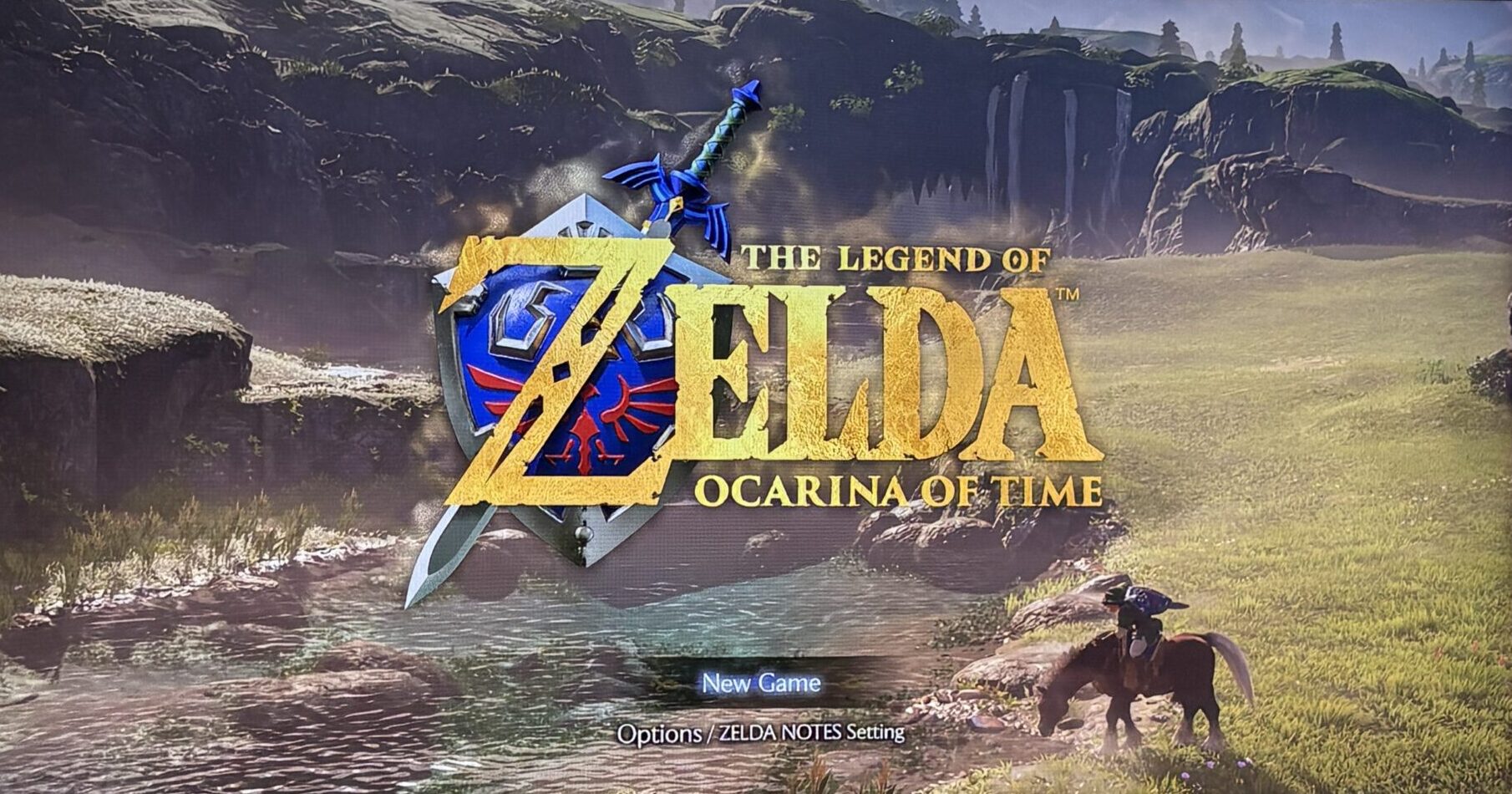
I was about 8 years old when I first picked up a controller and stepped into the world of The Legend of Zelda: Ocarina of Time. My parents had bought the game for my brother and I for Christmas that year, along with the just-released bundle with the Jungle Green N64 and Donkey Kong. I remember exploring Kokiri Forest, collecting rupees, breaking pots, and wondering what secrets might be hiding around the next corner.
At the time, I was just playing a video game, and I certainly wasn’t thinking about my future career or professional skills, but looking back, I think some of the things that made me love Zelda are also the things that eventually helped me grow into a solid web developer. After more than a decade working in this industry, I’ve come to realize that the two have quite a bit in common, as both require curiosity, creativity, persistence, logical thinking, and a willingness to experiment, as well as solving puzzles, understanding how different pieces fit together, and occasionally getting stuck on something that should be much easier than it is.
With a new remake of Ocarina of Time bringing this classic adventure back into the spotlight, it feels like the perfect opportunity to revisit a game that shaped so much of my childhood, and reflect on a few things it taught me along the way.
Problem-solving is about looking at things from different angles
Remember the Great Deku Tree? Before you can even get inside, you have to prove yourself worthy, and once you’re in, you’re faced with a series of interconnected rooms, obstacles, switches, enemies, and puzzles. You need to assess the situation and figure out how to navigate the environment, what you can interact with, and which tools will help you progress.
One of the things Zelda does so well is teach you to pay attention to your surroundings. Is there a suspicious-looking wall, or maybe a switch you can’t quite reach or a platform that seems useless? Maybe there’s a way to set something on fire, hit a target with your slingshot, or otherwise use the environment to your advantage.
Web development is also full of these kinds of puzzles. A client might come to you with a problem, but the solution isn’t always immediately obvious., or maybe they want a particular feature, but the best way to implement it isn’t what they initially envisioned. Sometimes a design presents a technical challenge, or a plugin conflict creates an unexpected problem. Being a good developer means knowing how to investigate, break a problem into smaller pieces, recognize patterns, and approach things from different angles. Sometimes the solution is simple, sometimes you need to experiment with a few different approaches, and sometimes, just like in a Zelda dungeon, the answer was right in front of you the whole time.
The right tools make all the difference
Another mechanic in Ocarina of Time is the way you gradually collect items that open up new possibilities. Early on, you have only simple equipment at your disposal: the Kokiri Sword, Deku Shield, and Fairy Slingshot. As you progress, you collect things like bombs, the Boomerang, the Hookshot, and the Fairy Bow, and each item gives you a new way to interact with the world. Often, an item you collect in one dungeon becomes essential to solving a puzzle in another, and that’s a pretty good metaphor for a career in web development.
Over the years, I’ve built up my own collection of tools: HTML, CSS, PHP, JavaScript, WordPress, custom fields, plugins, frameworks, and all sorts of other technologies. Knowing how and when to use them (and when not to use them) is critical. Just like it makes no sense to try and use the Megaton Hammer to hit an eye switch across a room, you probably wouldn’t do a complicated custom e-commerce build if a simple, well-supported existing tool or service could be a better fit for the project. The trick is understanding the problem first, then choosing the right tool for it based on the specific goals or business needs. It’s also important to recognize that the tools you have aren’t necessarily the tools you’ll use or need forever – sometimes you need to learn something new, upgrade your equipment, or revisit an old technique with a fresh perspective.
Persistence is part of the process
If you’ve played this game, you probably have some memories of getting stuck. Maybe you spent far too long trying to figure out the puzzles in the Forest Temple, or found yourself wandering around the Water Temple wondering if you’d ever see dry land again, but you just have to keep trying.
Debugging is much the same. You can spend an unreasonable amount of time trying to track down a CSS issue, figure out why a WordPress plugin isn’t behaving as expected, or understand why something works perfectly in Chrome but breaks in another browser. The important thing is not to panic when something doesn’t work the first time. You learn to test things, eliminate possibilities, retrace your steps, and look for clues. You might need to try a different approach, search for documentation, ask for help, or step away from the problem and come back with fresh eyes, but when you finally figure it out, that little moment of victory is incredibly satisfying.
Understanding how everything connects is key
Hyrule isn’t just a collection of disconnected locations, it’s an interconnected world where your actions, discoveries, and abilities influence what you can do next. One of the most interesting mechanics in Ocarina of Time is the ability to travel between childhood and adulthood. Pulling the Master Sword from the Pedestal of Time transforms Link into an adult, and suddenly the world is different – places you visited as a child have changed, NPCs have aged, and you also discover that certain actions have consequences across time. Planting a Magic Bean as a child, for example, creates a fully grown plant you can use as an adult. It’s a clever way of teaching you to think about cause and effect, dependencies, and how individual actions fit into a much bigger system.
Websites work in a similar way. A website isn’t just a collection of individual pages., it’s a system made of interconnected components, templates, content, functionality, and design decisions, and changing one thing can have consequences elsewhere. A new page might require changes to the navigation, a design update could affect reusable components site-wide, or a plugin could introduce a conflict with another feature or customization. Thinking about the bigger picture and understanding how all the pieces fit together aids in creating websites that are cohesive, maintainable, and functional.
Sometimes you need a fresh perspective
One of the most memorable things about Ocarina of Time is the way the game gradually teaches you to see the world differently. You learn songs on your ocarina that allow you to interact with the environment in entirely new ways – Zelda’s Lullaby opens up certain paths and mechanisms, the Song of Time moves blocks and unlocks access to new areas, and the Song of Storms changes the weather and reveals things you might otherwise miss.
There’s also the Lens of Truth, which literally lets you see through illusions and uncover things hidden from view. Sometimes the information you need is already there, you just might not yet have the right perspective to see it. In web development, this might mean looking at a design from a user’s perspective rather than a developer’s, questioning an assumption, reconsidering an existing process, or realizing that the problem you’re trying to solve isn’t actually the problem your client has. It’s easy to get caught up in the technical details of building something, but taking a step back and looking at the bigger picture can reveal a much better solution.
Exploration and curiosity lead to discovery
Some of my favourite parts of the game aren’t even required to finish the main quest, they’re the little discoveries along the way: finding a hidden grotto, collecting Gold Skulltulas, tracking down Heart Pieces, experimenting with different songs, or stumbling across something surprising while riding Epona across Hyrule Field. The game rewards you for being curious, and encourages you to explore, talk to characters, revisit places, and investigate things that might not seem important at first glance.
I think that curiosity is one of the most valuable qualities a developer can have. Technology is constantly changing, and there’s always something new to learn. Whether it’s experimenting with a new tool, exploring a different development framework, learning about accessibility techniques, or finding a more efficient way to accomplish something, staying curious keeps you growing. Some of the best things I’ve learned haven’t come from a project requirement or course, they’ve come from a sense of play and simply wondering, “what if I tried this?”
Sometimes a game inspires you to do something in real life
Another impact this game has had on my life is that it made me want to learn to play an actual musical instrument. In the game, the ocarina isn’t just an item you collect, it’s an essential part of the adventure. You learn melodies that have different effects on the world around you, and music becomes another way to solve problems and connect with people.
I was so enamoured with this idea that it inspired me to get a real ocarina and learn to play it, and I think it’s very cool that a video game sparked an interest in something tangible outside of the game itself. It also speaks to something I think is important in both life and work, which is following the fun, Sometimes things start out as simple entertainment, but can lead you down an entirely unexpected path, and you never know what skills, experiences, or new passions might come from exploring something you enjiy.
You don’t have to do everything alone
Of course, if I’m going to write about Ocarina of Time, I can’t forget to include Navi. Whether you find her helpful or occasionally want to throw her into the nearest river, Navi is always there to offer hints, point out important details, and alert you when you might have missed something. It’s a funny little reminder that even the Hero of Time needs a helping hand sometimes. In web development, knowing when (and how) to seek help is just as important as knowing how to solve things independently. Collaboration, code reviews, documentation, and sharing knowledge with other developers and peers can make a huge difference.
When I’ve worked as part of a development team, some of the best solutions have come from bouncing ideas around, getting another set of eyes on a problem, or learning from someone with a different area of expertise. Being a good developer doesn’t mean knowing everything, it means being resourceful enough to find the answers, being comfortable admitting when you don’t know something, and being willing to learn from the people around you.
Sometimes you have to decide when to jump
Here’s an interesting detail about the remake: it introduces a dedicated jump button, whereas the original game handled jumping automatically when Link ran toward an edge, and I think that’s similar to what freelancing feels like sometimes. In the original game, you didn’t have to think about jumping, you simply ran toward a ledge, and Link took care of the rest. There was a certain amount of built-in guidance and structure like a traditional job, but with freelancing, there’s no automatic jump.
You have to learn to recognize the opportunities in front of you, decide when to take a leap, and trust yourself to make it to the other side. Sometimes that means reaching out to potential clients, putting yourself and your work out into the world, trying a new service, taking on an unfamiliar project or technology, or making a career change that feels terrifying. You don’t always know exactly where you’ll land (or how softly) and there’s no guarantee that every leap will work out, but you learn to assess the situation, trust the skills you’ve built, and take responsibility for your own direction.
The adventure never really ends
Looking back, I never would have guessed that a video game I’ve loved since I was a kid would have so many parallels with the career I eventually built for myself, but maybe that’s the thing about learning – it doesn’t always look like learning while it’s happening, sometimes it looks like figuring out how to get past a particularly frustrating dungeon, discovering that a song can unlock a hidden passage, or spending an afternoon exploring the world just because you’re curious about what’s around the next corner.
The new version is a lovely excuse to revisit a game that is so close to my heart, and while I’m looking forward to experiencing Hyrule all over again, I’m also appreciating how much the original game helped shape the way I think, learn, and approach challenges. From problem-solving and creative thinking to persistence, curiosity, and knowing when to ask for help, it turns out some of the skills that make a good web developer can be learned long before you ever write your first line of code, and sometimes you need to stop waiting for the game to jump for you and make that decision yourself.
Bonus Content: Thank you for reading! Here’s a video of me from 15 years ago, playing Lon Lon Ranch on two different ocarinas.